Curated selections of high-reliability products, lithium battery packs, and specialized outdoor illumination devices.
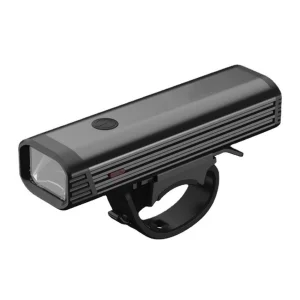
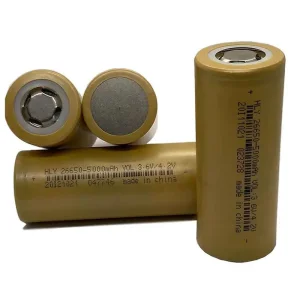
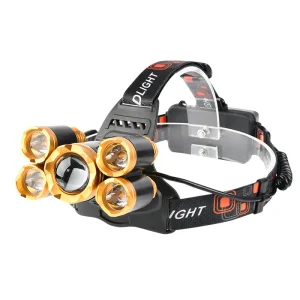
A statistical analysis of underwater illumination market demands and the manufacturing ecosystem.
Underwater illumination has evolved from simple incandescent waterproof torches to sophisticated, micro-controlled LED and LEP (Laser Excited Phosphor) systems. The global market for rechargeable dive lights has seen a significant compound annual growth rate (CAGR), driven by the expansion of marine tourism, deep-sea research, offshore energy infrastructure development, and search and rescue (SAR) missions.
Commercial diving operations—such as offshore oil rig inspections, hull cleaning, underwater welding, and subsea cable routing—demand lighting systems that offer absolute reliability, high luminous flux, and prolonged runtimes. Simultaneously, the recreational scuba diving sector has registered an influx of advanced divers participating in cave diving, wreck diving, and technical deep diving. This transition from basic backup lights to high-lumen, primary canister lights has highlighted the necessity for highly efficient power sources and reliable sealing technologies.
"The modern dive light is no longer a peripheral accessory; it is safety-critical life-support equipment. In the zero-visibility conditions of deep salvage or cave diving, a illumination failure can lead to disorientation and catastrophic decompression emergencies."
As global environmental frameworks tighten, there is an industry-wide transition away from disposable alkaline batteries toward high-density lithium-ion battery configurations, such as 26650, 26700, and 21700 cells. This transition reduces toxic battery waste and improves thermal and power efficiency, ensuring stable voltage profiles during deep submersions.
A high-performance dive light must survive extreme hydrostatic pressure and corrosive marine environments. Understanding the mechanics behind waterproofing, thermal management, and electronic drivers is vital for procurement professionals selecting high-end supply partners.
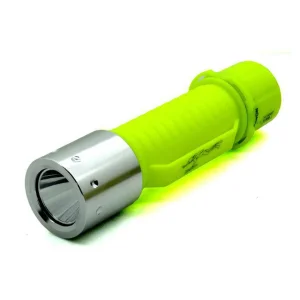
For a dive light to achieve an IPX8 waterproof rating certified for 100 meters (10 ATM) or deeper, mechanical design is paramount. High-end manufacturers utilize aerospace-grade 6061-T6 aluminum alloy, hard-anodized to Mil-Spec Type III to prevent galvanic corrosion. Crucially, the sealing joints employ dual O-ring structures (typically nitrile or fluorocarbon rubber) seated in precision-machined grooves. These O-rings undergo radial and axial compression to form a dynamic seal that tightens as depth increases and external pressure rises.
High-lumen LEDs (such as CREE XHP series or Luminus chips) generate considerable thermal energy. On land, these lights can rapidly overheat, causing degradation of the LED emitter and the driver circuit. Quality dive lights integrate active thermal step-down mechanisms:
Unlike consumer flashlights that dim as the battery drains, industrial dive lights require a buck or buck-boost constant-current driver. This maintains a steady lumen output throughout the battery’s discharge curve. Integrated BMS modules in rechargeable packs prevent over-discharge, over-charge, and short circuits, which is critical given the volatile nature of lithium-ion chemistries under pressure.
The global supply chain for high-performance illumination is concentrated in China’s industrial zones—specifically the Zhejiang (Ningbo) and Guangdong (Shenzhen) manufacturing corridors. Ningbo is known for precision metal machining, casting, and mechanical assembly, while Shenzhen is a hub for optical design, driver development, and lithium battery integration.
By combining Zhejiang’s hardware capabilities with Guangdong’s advanced electronic supply chains, Chinese manufacturers can rapidly develop and scale customized lighting solutions. This collaborative ecosystem enables OEM and ODM providers to reduce prototype turnaround times from months to weeks.
Furthermore, this vertical integration ensures strict quality assurance. Companies like Ningbo Geek Flashlight Co., Ltd. operate within this ecosystem, maintaining direct access to domestic CNC machining facilities, optical lens factories, and specialized laboratory testing facilities (including hyperbaric chambers). This allows them to offer high-specification products while maintaining cost competitiveness.
Different professional and recreational scenarios demand specialized specifications. B2B procurement agents must evaluate their target demographics to select the appropriate rechargeable illumination systems.
Requires high-durability canister lights with ultra-thick aluminum casings, magnetic toggle switches that resist sand intrusion, and high-capacity battery packs that support 6+ hours of continuous runtime.
Demands tight beam angles (8° to 10°) for signaling through high-turbidity water, paired with a reliable SOS flashing beacon mode and emergency backup circuits to assist in dark cavern navigation.
Requires wide, hot-spot-free flood beams (110° to 120°) featuring high Color Rendering Index (CRI > 90) chips to accurately capture marine life coloration without creating harsh shadows or washed-out images.
To ensure supply chain resilience, global distributors should verify that potential manufacturing partners perform comprehensive testing, including hydrostatic pressure trials, drop testing, battery cycle aging, and thermal profiling.

Established in 2011, Ningbo Geek Flashlight Co., Ltd. has developed into an international, comprehensive designer and manufacturer of high-end LED & LEP lighting systems. Headquartered in the logistics hub of Ningbo, Zhejiang province, with an R&D and specialized production facility in Longhua District, Shenzhen, Guangdong province, the company occupies a strategic position spanning two of China's most advanced manufacturing zones.
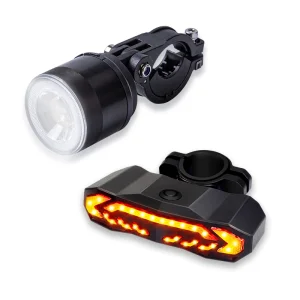
Our core focus centers on the research, development, custom prototyping, and mass production of advanced lighting products. Our diversified portfolio includes specialized vehicle lighting (bicycle lights, E-scooter lamps, motorcycle auxiliary headlights, off-road SUV light bars) and professional-grade outdoor lighting (rechargeable LED flashlights, LEP laser spotlights, rechargeable dive torches, mining headlights).
Operating under an ISO9001-2010 certified quality management system, we emphasize OEM and ODM customization services. All products utilize certified raw materials and components, complying with major international standards including CE, RoHS, UL, and SAA. Over the past 12 years, we have built long-term relationships with distributors, wholesalers, and brand owners in the United States, the United Kingdom, Canada, France, Germany, Norway, Belgium, Australia, New Zealand, Saudi Arabia, Japan, and South Korea.
Technical guidance and sourcing advice from our engineering team.
Water under pressure will exploit any micro-gap in a seal. A single O-ring can twist or deform during assembly. A double O-ring configuration provides a secondary barrier. If the primary outer seal suffers minor deformation or collects a grain of sand, the secondary inner O-ring maintains the seal, preventing catastrophic water ingress under high hydrostatic pressure.
We utilize specialized hyperbaric testing chambers during the quality control stage. Unlike typical batch-testing practices, our deep-sea series lights undergo individual pressure testing equivalent to 1.25 times their rated depth limit. Only units that pass this chamber test without showing moisture or pressure drops are approved for final packaging.
26650 and 26700 lithium cells offer higher capacity (typically 5000mAh or more) compared to standard 18650 cells (usually 2600-3500mAh). This translates to longer runtimes at higher currents without requiring multi-cell configurations, which helps keep the overall diameter of the dive light comfortable for hand-held use.
High-output LEDs generate heat that must be dissipated to prevent damage. Our dive lights feature internal temperature sensors within the driver board. If the light is turned on outside of water and the housing temperature reaches 55°C, the microcontroller automatically steps down the current to protect the LED and electronics, ramping back up once the light cools.
Yes, our ODM and OEM services cover mechanical laser engraving, anodizing color customization, driver programming (altering mode cycles, lumens, or step-down thresholds), and designing custom packaging. We also offer customization of optical beam angles to meet specific client requirements.
All our major products comply with international standards and hold CE, RoHS, UL, and SAA certifications. This ensures that the electrical components, battery chargers, and internal battery cells meet safety and environmental regulations in global markets.
Complete product offerings ranging from tactical submersibles and emergency headlamps to automotive accessories.
 Geek Flashlight