Precision-engineered OEM/ODM assemblies manufactured to meet stringent global roadway compliance and extreme outdoor environment metrics.

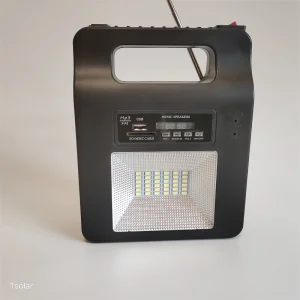
Analyzing procurement shifts across municipal urban transport, micro-mobility fleets, and premium tier-1 cycling retail markets.
Global commercial bike-share operators and delivery logistics fleets (e.g., last-mile courier services) are enforcing high-durability, anti-vibration light modules. Sourcing specifications mandate hardwired CAN-bus compatibility, wide-voltage inputs (6V-60V direct DC-DC stepping), and automated day-running light (DRL) algorithms to reduce vehicle-collision liabilities.
European markets—led by Germany's strict StVZO (Straßenverkehrs-Zulassungs-Ordnung) regulations—demand glare-free asymmetric optical patterns. B2B buyers no longer seek raw, unfocused lumens. Modern procurement mandates engineered beam horizons that focus light strictly on the asphalt, eliminating high-angle glare that blinds oncoming automotive traffic.
The standard bicycle light has evolved into an active IoT edge node. Global brands require custom ODM architectures featuring integrated 6-axis MEMS gyroscopes for automatic brake light illumination, ambient light sensors for dynamic brightness adjustment, and mmWave radar alerts for rear-approaching vehicle identification.
A deep dive into optical physics, semiconductor thermal management, and intelligent power electronics powering top-tier cycling accessories.
Modern visibility engineering hinges on maximizing optical efficiency (lumens per watt) while controlling light divergence. OEM designs utilize specialized high-purity optical Grade PMMA or Polycarbonate TIR lenses. By combining parabolic reflectors with multi-faceted micro-prism arrays, our optical engineers achieve precise throw-to-flood ratios.
For high-speed electric bicycles, dual-beam optics are deployed: a low beam with a razor-sharp cut-off horizon for urban paths, and a high-voltage boost beam pushing throw distances beyond 150 meters utilizing high-luminance LED chips (e.g., Luminus, Cree, or Osram arrays).
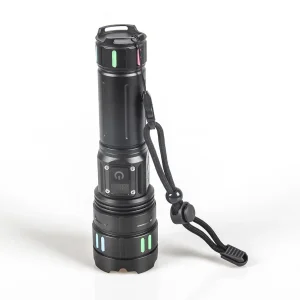
For high-performance tactical, searching, and long-range outdoor headlamps, laser-excited phosphor (LEP) technology represents the pinnacle of optical concentration. Unlike traditional surface-emitting LEDs, LEP modules channel a blue laser emitter through a static phosphor crystal, generating an ultra-collimated white light beam with virtually zero spill intensity.
Our specialized ODM engineering facilities produce compact LEP headlight units capable of delivering over 1500 lumens with lux intensities reaching tens of thousands of candela at long range, optimized for extreme night visibility and off-road exploration.
LED luminous flux decays rapidly when junction temperatures exceed critical thresholds (typically 85°C to 105°C). To maintain steady-state output without step-down dimming, our custom circuit boards incorporate high thermal conductivity aluminum-backed PCBs (MCPCB) paired with precision CNC-machined 6063 aluminum housing sinks.
Our proprietary driver topology utilizes high-efficiency Synchronous Buck/Boost switching regulators operating at >92% electrical efficiency. Integrated NTC dynamic thermal sensors continuously monitor housing heat, adjusting current via high-frequency Pulse Width Modulation (PWM) without noticeable flicker.
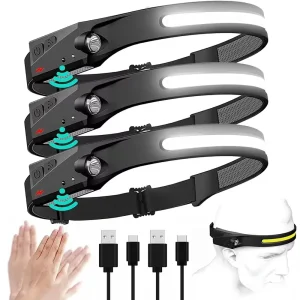
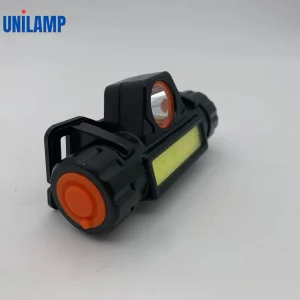
Hands-free operation is paramount for cyclist stability and mountain trail navigation. Our smart headlamps feature dual infrared gesture sensor arrays embedded within the housing facade. Cyclists can cycle through beam profiles, toggle high-contrast warning strobes, or trigger boost modes via simple hand proximity swipes, even while wearing heavy winter gloves.
Low-power BLE (Bluetooth Low Energy) and 2.4GHz wireless remote controls are seamlessly integrated into custom ODM cockpits, letting riders toggle front and rear lighting matrices without shifting hand position on the handlebar grip.
| System Parameter | Standard Urban Commuter Spec | E-Bike Integrated System Spec | Pro-Grade Off-Road & LEP Spec |
|---|---|---|---|
| Luminous Output Range | 200 – 600 Lumens | 600 – 2000 Lumens | 1500 – 10,000 Lumens |
| Input Voltage Tolerance | 3.7V Single Li-ion Cell | 6V - 60V Direct E-Bike DC-DC | 7.4V - 12V Dual High-Drain Pack |
| Optical Beam Profile | Wide Flood / Uniform COB Array | StVZO Cut-off Low Beam + Spot High Beam | Ultra-Collimated Spot TIR / LEP Laser |
| Ingress Protection Rating | IPX5 to IPX6 (Rainproof) | IPX7 (Temporary Immersion) | IPX8 / Submersible Sub-aquatic Grade |
| Battery Chemistry & BMS | 18650 / Polymer Cell (1500-3000mAh) | Direct Drive off E-Bike Battery System | High-capacity 21700 Pack w/ Over-charge Protection |
| Smart Sensor Capabilities | Auto Light Sensor | CAN-Bus speed sync + Brake Gyro | Gesture Motion + Thermal Auto-throttling |
A global leader in OEM & ODM illumination solutions, integrating optical R&D, precision CNC processing, and automated SMT production lines.
Ningbo Geek Flashlight Co., Ltd. was established in 2011, located in the beautiful international metropolis Ningbo city of Zhejiang province. To accelerate technical innovation and global sales service, our strategic tech operations are situated at 8th Floor, Tongtong Huiying Center, Qingquan North Road, Longhua Street, Shenzhen City, Guangdong Province.
We are an international comprehensive enterprise focusing on a variety of LED & LEP lighting lamps' research and development, design, production, and sales, as well as customized processing of accessory parts and full-suite OEM/ODM systems engineering.


12+ years of continuous partnerships with premier brands, wholesalers, and fleet integrators across major global territories.
Supplying Tier-1 importers and cycling accessories brands across the United States and Canada. Our product line complies with ANSI/NEMA FL-1 standards for lumen output, runtime, impact resistance, and drop protection. All battery assemblies integrate UL-compliant protection circuit modules (PCM) to pass stringent port inspections.
Extensive distribution throughout the United Kingdom, France, Germany, Norway, Belgium, and greater Europe. Full compliance with CE, RoHS directives, REACH chemical safety standards, and StVZO photometric cut-off regulations ensures seamless market access and legal safety compliance on European cycle lanes.
Long-term strategic growth across Australia, New Zealand, Saudi Arabia, Japan, and South Korea. Providing localized packaging support, customized user manuals, and extreme-weather thermal durability testing (optimized for desert heat resilience and freezing sub-zero trail operations).
After more than 12 years of specialized development, our factory standardized management workflows under the ISO9001-2010 Quality Management System. We insist on providing B2B clients with formal, top-grade original raw materials and certified components. Every production run undergoes rigorous multi-stage quality checks—including integrating sphere lumen testing, salt-spray corrosion tests, vibration endurance tests, and thermal imaging profile checks—ensuring a absolute 100% factory pass rate prior to container dispatch.
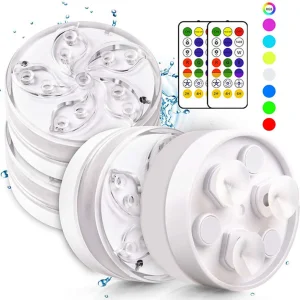
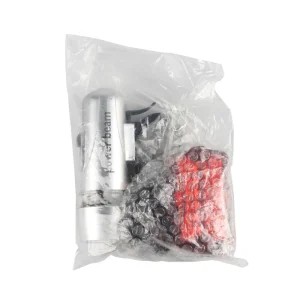
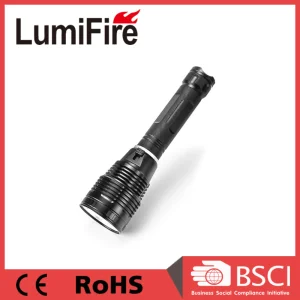
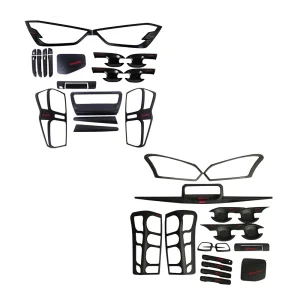
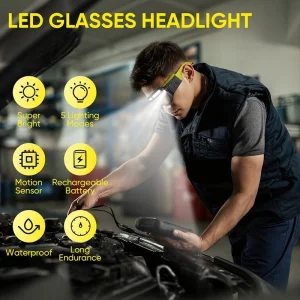
Explore our extended OEM portfolio encompassing sub-aquatic diving lights, multi-functional flashlights, and vehicle-specific lighting accessories.
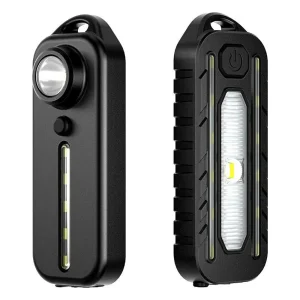
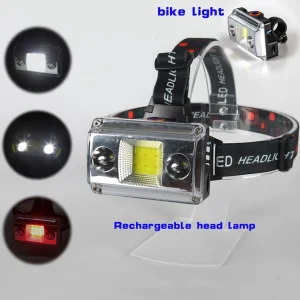
Anticipating the convergence of micro-mobility hardware, autonomous vehicle detection, and smart smart-city lighting networks.
The next evolution in bicycle lighting eliminates static beam angles. Future OEM modules under our R&D roadmap incorporate miniaturized solid-state LiDAR sensors. These sensors detect cornering angles, elevation shifts, and oncoming pedestrian positions in real-time, dynamically adjusting matrix LEDs to illuminate turns before steering input occurs.
To support green carbon-neutral mobility mandates, next-generation urban commuter lights are integrating high-efficiency monocrystalline solar panels with micro-harvesting power management ICs. Paired with next-gen LiFePO4 or hybrid graphene cells, these lights operate with zero grid-charging dependency during summer commuting cycles.
As connected vehicles become standard, active cycling lights will serve as physical and electronic beacons. By embedding pulse-coded Infrared LEDs into headlight architectures, smart bike lights broadcast proximity data directly to autonomous vehicle ADAS systems, rendering cyclists fully visible to self-driving cars even in dense fog.
In-depth responses covering OEM customization parameters, tooling timelines, certification compliance, and supply chain logistics.
 Geek Flashlight