Choosing a bike LED lens supplier in China involves more than comparing prices. The lens shapes the beam, controls glare, and affects how evenly light reaches the road. A small mismatch between the LED chip and lens can create dark patches or wasted brightness. Small details matter.
This guide introduces ten suppliers and practical ways to compare them. It considers optical design, material options, production capability, sample testing, communication, and customization. Ask for beam-pattern data and inspect a sample with your intended LED and housing. A catalog image alone cannot show how the finished lamp performs. How to select the right LED optical lens for your bike's lighting system? Start with the beam you need, then check dimensions, compatibility, thermal conditions, and test results.
Supplier rankings can be useful starting points, but they are not proof of consistent quality. Capabilities and lead times may change, and a good fit for one project may not suit another. Request clear specifications, confirm what testing is included, and compare samples under the same conditions. If the details remain vague, pause before committing. This guide aims to make those conversations more focused, while recognizing that no checklist replaces hands-on evaluation.
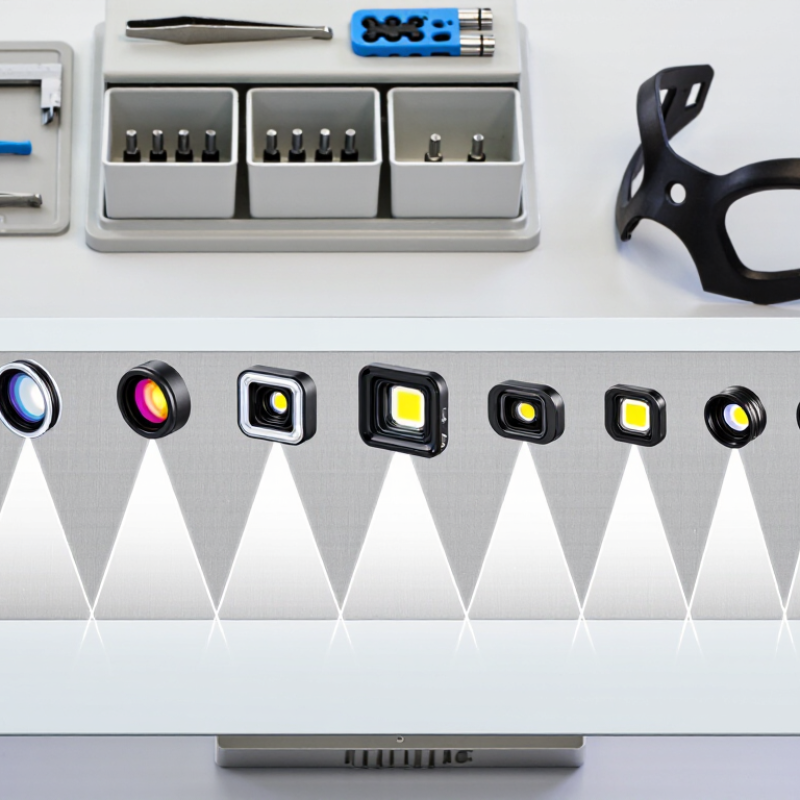
A bike LED lens is the clear optical part in front of an LED. It does not produce light. It gathers and redirects light from the diode into a useful beam. Without a lens, much of the light spreads sideways or creates uneven bright spots. A small lens can change how far the beam reaches and how wide it appears on the road.
Most lenses use molded optical surfaces, such as curved elements or small internal facets. These surfaces bend light as it passes through them. A narrow pattern may help illuminate a path farther ahead, while a wider pattern can show more of the roadside. Some designs also shape the beam to reduce glare for approaching riders. Results depend on the LED position, lens geometry, and assembly accuracy. Tiny shifts matter.
Look closely at a sample under steady light. Check for cloudy patches, scratches, bubbles, or uneven edges. Then test the beam on a wall at a fixed distance; a sharp center with dark gaps may signal poor optical control. Heat can also affect nearby plastic and seals over time, so material choice matters. I would not judge a lens by appearance alone. A clear lens can still produce a messy beam.
Use these ten practical criteria to understand bike LED lens technology and compare suppliers. The rows are evaluation criteria, not a ranking of named companies.
| No. | Evaluation dimension | What to understand or assess | Evidence to request from a supplier |
|---|---|---|---|
| 1 | Lens function | A bike LED lens is an optical component that helps direct and distribute light from an LED. Its shape and surface features influence the beam pattern; it does not create light. | An optical drawing or explanation of the intended beam pattern and how the lens works with the specified LED. |
| 2 | Optical design and beam control | Refractive surfaces bend light as it passes between materials. Some designs also use total internal reflection (TIR) to redirect light within the lens. The final beam depends on the lens, LED, reflector or housing, and their alignment. | A beam-pattern image or photometric test report made with the intended LED and assembled light, rather than the lens alone. |
| 3 | Lens material | Optical-grade PMMA is commonly selected for transparency and weathering performance; polycarbonate is known for impact resistance. Suitability depends on the design, operating conditions, coatings, and material grade. | Material grade, optical properties, temperature limits, UV or weathering information, and any coating specifications. |
| 4 | Optical performance data | A useful evaluation considers the assembled light’s beam shape, intensity distribution, and optical losses. Lumens alone do not describe where the light goes or how effectively the road is illuminated. | Test conditions, measurement method, beam distribution, and relevant photometric data for the complete lighting assembly. |
| 5 | Dimensions and tolerances | Lens dimensions and positioning affect LED-to-lens alignment and therefore can affect the beam. Critical dimensions should be defined on the drawing and checked during production. | A dimensioned drawing with tolerances, inspection points, and sample measurement records. |
| 6 | Manufacturing capability | Optical molding quality depends on factors such as tooling condition, process control, and handling. Surface defects, contamination, or inconsistent molding can affect appearance or optical performance. | A description of the molding and inspection process, sample parts, and the supplier’s approach to defect control. |
| 7 | Environmental durability | A bike light may encounter rain, dust, vibration, temperature changes, and outdoor UV exposure. Lens durability should be assessed as part of the complete product and its sealing design. | Relevant environmental test methods and results, with test conditions and sample configuration clearly identified. |
| 8 | Thermal and assembly compatibility | The lens must fit the housing and remain suitable under the product’s operating temperatures. LED heat management is primarily a system-design issue, but nearby components and assembly choices can affect lens performance. | Assembly drawings, material temperature limits, and validation information for the intended light and housing. |
| 9 | Quality control and traceability | Consistent production requires defined acceptance criteria and a process for identifying and managing nonconforming parts. Traceability supports investigation when a quality issue occurs. | Inspection criteria, batch identification practices, sample inspection records, and a documented corrective-action process. |
| 10 | Compliance and project support | Lighting requirements vary by product type and sales market. Confirm applicable rules for the complete bicycle light; a lens by itself does not establish product compliance. Clear communication and engineering support also help resolve fit and optical issues. | Market-specific compliance documentation for the finished product, plus a named technical contact and a documented sample-approval process. |
It shapes how light reaches the road. A focused beam can reveal a dark path farther ahead.
It spreads light across nearby pavement. That can make turns, road edges, and potholes easier to spot. Not every beam feels right.
TIR lenses guide light through internal reflection and can create compact beams. Fresnel-style lenses use fine ridges and stay relatively shallow.
Commuters may prefer wider, controlled light for road edges. Trail riders often benefit from broad near-field coverage on winding routes.
It can suit open roads, but a narrow beam may leave the sides dark. Check the edges, too.
Aim it at a wall, then test outdoors at dusk. Look for dark gaps and glare. A desk test is not enough.
Compare dimensions with the approved drawings. Inspect clarity, surface marks, and fit under consistent lighting. Small gaps matter.
Ask for drawings, material specifications, sample timing, and batch records. Check heat, vibration, and moisture performance. Some issues appear only in field use.
This article explains what bike LED lenses are, how they shape and direct light, and why lens design matters for visibility, beam control, and energy efficiency. It introduces common lens types and their typical uses, helping readers understand how different optical designs suit various bicycle lighting needs. It also presents an overview of ten bike LED lens suppliers in China without focusing on brand promotion, outlining the kinds of products and manufacturing capabilities buyers may encounter.
The guide offers practical criteria for comparing suppliers, including product quality, customization options, production capacity, testing procedures, and relevant certifications. It then walks through the selection and verification process, from defining technical requirements and requesting samples to checking documentation and evaluating performance. By following these steps, readers can make a more informed decision about “How to select the right LED optical lens for your bike's lighting system?”

 Geek Flashlight