In today's fast-paced world, how to extend the battery life of your rechargeable LED flashlight? It's a common concern for outdoor enthusiasts and the everyday user alike. A reliable flashlight is essential, whether you're hiking in the woods or navigating through a power outage. However, maintaining the charge of your LED flashlight can sometimes feel like a challenge.
One crucial tip is to avoid constant high settings, which can drain the battery quickly. Instead, use lower light modes when possible. Additionally, regular maintenance can greatly enhance performance. Cleaning the contacts and ensuring a tight battery fit can help prevent power loss. The importance of storing your flashlight correctly can't be overstated; extreme temperatures can affect battery lifespan significantly.
Reflecting on the usage habits can lead to improvements. Many users forget to recharge their flashlights after use. This oversight can mean a dead battery when you need it most. Consider creating a routine for charging. Small adjustments can lead to longer battery life and better reliability. By following these essential tips, you can keep your flashlight ready when every moment counts.
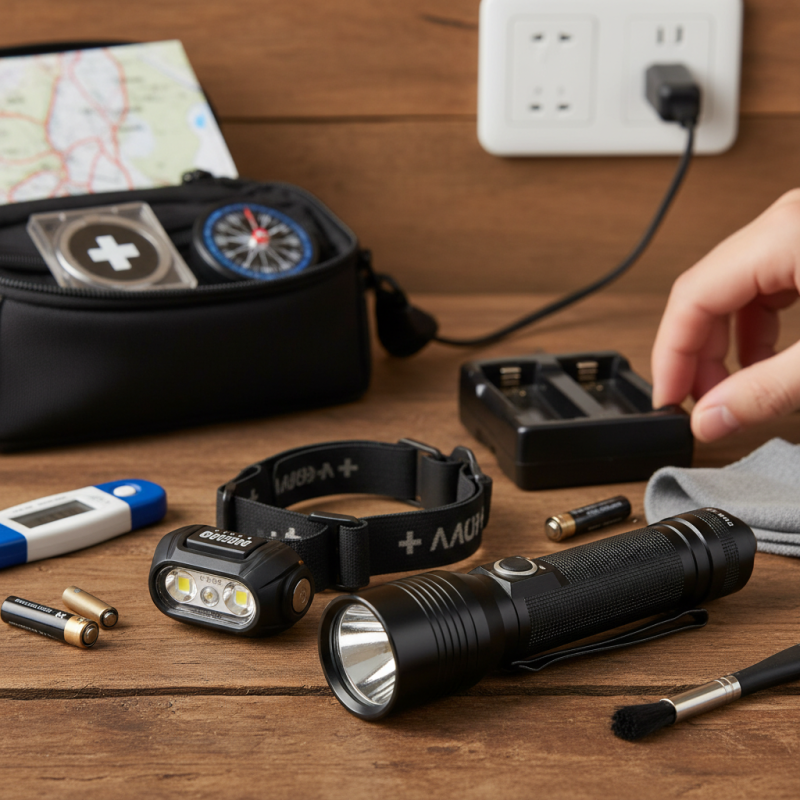
Understanding LED Flashlight Battery Basics
Understanding the basics of LED flashlight batteries is crucial for optimal usage. LED flashlights often use lithium-ion or alkaline batteries.
Lithium-ion batteries provide longer run times and faster charging, while alkaline batteries are more accessible but less efficient. Knowing the type of battery can significantly impact your flashlight’s performance.
To extend battery life, avoid letting your flashlight sit unused for long periods. Regularly cycling the batteries can help maintain their charge and longevity. Consider turning off the flashlight when not in use. Small habits like this can make a big difference.
Another tip is to keep the flashlight clean and dry. Dirt and moisture can cause electrical shorts, negatively affecting power. Regular maintenance is vital for performance longevity.
Storing the flashlight in a cool, dry place also prevents battery drain, especially in warmer climates. These practices enhance the reliability of your flashlight, making it ready when you need it.
Choosing the Right Battery Type for Longevity
Choosing the right battery type for longevity is crucial for maximizing your LED flashlight's performance. Lithium-ion batteries are popular due to their high energy density and long cycle life. A recent study showed that these batteries can last up to 2,000 charge cycles, far surpassing traditional alkaline batteries, which typically last only 24 to 48 hours of constant use. The operational efficiency of lithium-ion batteries also ensures a more consistent output, enhancing the flashlight's brightness.
However, not all lithium-ion batteries are created equal. Some may have a lower quality and lead to rapid degradation. In contrast, high-quality nickel-metal hydride (NiMH) batteries provide a good balance for many users. These batteries are more stable, offering about 500 charge cycles and retaining more charge over time. It’s essential to consider the voltage and capacity ratings. For instance, a 2000 mAh capacity typically provides a more extended service than a 1000 mAh battery, though it's crucial to ensure compatibility with your flashlight.
Another aspect to consider is the storage condition of the batteries. Storing batteries in high temperatures can reduce their lifespan significantly. In fact, it is suggested that batteries should be stored at room temperature and in a dry environment to maintain their longevity. An improperly stored battery might fail to hold a charge when needed. Focusing on battery selection and proper handling can dramatically impact overall flashlight performance.
Battery Types and Their Expected Lifespan for LED Flashlights
Proper Techniques for Charging and Discharging Batteries
When it comes to extending the battery life of your LED flashlight, proper charging and discharging techniques are crucial. Overcharging can lead to battery degradation. Always use chargers that match the battery's specifications. Pay attention to the color of the charge indicator. A green light often means it’s fully charged, while red may indicate ongoing charge or an issue.
Discharging your flashlight correctly can also significantly impact performance. Avoid letting the battery drain completely. Regularly discharging it to around 20% is ideal. This practice helps maintain the health of lithium-ion batteries, which are common in flashlights. Keep in mind, frequent deep discharges can shorten battery lifespan.
Finally, store spare batteries properly. Extreme heat or cold can harm battery performance. A cool, dry place is best. Check the batteries periodically for any signs of leakage or corrosion. Treat them gently; a little care goes a long way. Remember, how you charge and discharge your batteries makes a tangible difference in your flashlight's longevity.
Maintenance Tips for Improving Battery Efficiency
Maintaining the battery efficiency of your LED flashlight is essential for optimal performance. Regular checking of connections can prevent power loss. Loose or corroded connections will drain your battery faster than you think. Make sure to clean terminals regularly to ensure a good connection.
Charging habits play a vital role as well. Avoid draining the battery completely before recharging. This practice can lead to reduced battery lifespan. Charge your flashlight when it drops to around 20%. Frequent short charges are also better than long, full discharges.
Consider temperature effects on battery life. Extreme heat or cold can degrade the battery's performance. Store your flashlight in a cool, dry place. Avoid leaving it in direct sunlight or in a car during hot days. Regular maintenance and mindfulness of conditions can significantly extend battery life.
Storage Best Practices to Preserve Battery Life
Proper storage of batteries is essential for maximizing the lifespan of your LED flashlight. According to the National Renewable Energy Laboratory, improper battery storage can reduce performance by up to 30%. To avoid this, store your flashlight in a cool, dry place. Extreme heat can accelerate battery degradation. Ideal temperatures range from 20°C to 30°C (68°F to 86°F). This simple practice can greatly enhance battery longevity.
Another key practice is to store batteries partially charged. A study by the Battery University found that lithium-ion batteries last longer when maintained at approximately 40% charge during storage. This prevents deep discharge, a common issue with complete depletion. Regularly check the battery's charge if stored for an extended period. Small fluctuations in charge can lead to unexpected performance drops.
Consider using a battery management system for long-term storage. This tool monitors voltage levels and provides alerts for any issues. While this may seem technical, its benefits are noteworthy. Yet, for informal users, remembering to periodically check battery status can be an overlooked task. These practices, though simple, can prolong the effectiveness of your LED flashlight significantly.
FAQS
: Lithium-ion batteries are often best due to their high energy density and long cycle life.
They can last up to 2,000 charge cycles, greatly outlasting alkaline batteries.
No, some are lower quality, leading to rapid degradation and poor performance.
NiMH batteries last about 500 charge cycles and are more stable than some lithium-ion options.
Store batteries in a cool, dry place at room temperature to maintain longevity.
Regularly check connections and clean terminals to prevent power loss and battery drainage.
No, avoid complete discharges. Recharge around 20% to extend battery lifespan.
Avoid extreme heat, as it can significantly degrade battery performance.
Yes, checking their charge periodically is crucial to prevent unexpected performance drops.
A battery management system can monitor battery health and alert you to any issues.
Conclusion
To effectively answer the question, "How to extend the battery life of your rechargeable LED flashlight?", it's essential to understand the fundamental principles of LED flashlight battery maintenance. Start by choosing the right battery type, as some batteries are designed for longer lifespans and better performance. Implementing proper charging and discharging techniques will also enhance battery longevity; avoid overcharging and fully depleting the battery whenever possible.
Regular maintenance, such as cleaning contacts and checking for leaks, will improve overall battery efficiency. Lastly, storing batteries in a cool, dry place and following best storage practices can significantly preserve battery life. By incorporating these tips, users can maximize the functionality and lifespan of their LED flashlights, ensuring reliable performance when needed.

 Geek Flashlight